Listen to Pilot Light

Showing posts with label writing. Show all posts

Monday, June 29, 2020

Caribbean Dreaming

I'm working on a trilogy of cozy mysteries featuring my old friend Ron AƱejo, the world's best Caribbean boat bum. It wasn't his idea to become a detective... but circumstances make for odd outcomes. And, while Ron will take on the job with his usual enthusiasm and optimism, he doesn't know much about it. That means he'll bring his own style to the task of finding the killer--for better or worse.

Caribbean Dreaming by Dagny Sellorin
The stories all take place in my favorite place in the world--the fictional island of Kayakoo in the lesser Antilles. If the name sounds vaguely familiar, well, it's not far from the name of the real island it's based on. And if that isn't enough of a clue for you, here is a map of the island, showing the prominent features mentioned in the story.


What the map doesn't show is that the stories involves old wooden boats, a little Caribbean Obeah (Voodoo) and some shady development deals. In short, nothing you won't find all the time in the Caribbean.

Thursday, December 12, 2019

Rewriting in Asia


I just got back from spending a few weeks in Asia. I caught up with my co-writer J. Lee Porter and his wife Gigi, in Koh Chang, Thailand. At Elephant Bay, on the southern part of the island, we sat down and reviewed the current draft of CRYPTO CITIZENS face to face. This is our second book in the BITPATS series.

After long discussions, we decided that a few major changes were needed and we set about making them, as well as exploring the island and taking in Muy Thai kickboxing events.

We also went to Cambodia, visiting Koh Kong, where I used to live, and then to Phnom Penh, where I had to say goodbye.


I've just returned to the US and am digging through notes and revisions. We expect to finish the new version this month and send it to our editors. The cover is done (courtesy of Elizabeth Mackey
www.elizabethmackey.com) and we hope to get the book published in the first part of the year. If you are a reviewer looking for an advance copy, email me at FLOATSTREET@gmail.com and I'll put you on the list to get it in an acceptable format.

We are also blocking out a short story based in that part of the world. It will be another expat story... the expatriated, the marginalized are always interesting characters for us.


Wednesday, January 30, 2019

Back to the Caribbean

My friend and colleague, J. Lee Porter and I have finished the first draft of book two in the Bipats series: CRYPTO CITIZENS. It follows on the heels of CRYPTO SHRUGGED and looks at the ramifications of smart cities, surveillance capitalism, and of course, blockchain technology. It is a story of global intrigue and the fight for individual freedom. This story takes place in Mumbai, Ecuador, Singapore, Mexico, Venezuela, and Somalia, as well as the US and Europe and even out on the oceans.

We are working through the manuscript, and when it's done it will go to the editor and so on, but expect to get it out this year.

We are hoping to find someone who is interested in this struggle to find a meaningful balance between the implementation of technology and maintaining our individuality to write an introduction. To that end, we are reaching out to some key people. Unfortunately, key people can be difficult to reach, and it is an uphill battle to get them to read unpublished books. But it was ever so.

Meantime, I'm working on a trilogy of mystery stories that feature my favorite fictional character, Ron Anejo... the hero of my THE LEGEND OF RON ANEJO. He's still in the islands, based on the mythical island of Kayakoo at the lower end of the Lesser Antilles, and sailing his old Danish fishing boat, MeinGott. Even his dog Groucho gets involved when, in the first book, a land developer from Miami is killed. The working title for this one is Death by Jumbie Eyes. And if you don't know what jumbie eyes are, they are also called crab-eyed seeds and used in Obeah, the offshoot of voodoo practiced in the Caribbean.

It will be a fun story. I hope to have all three ready to go midyear.

Sunday, February 18, 2018

Anarchapulco 2018

So I'm at the Princess Mundo Imperial Hotel in Acapulco, Mexico talking to anarchists, freethinkers of various passions, crypto people... an amazing cross-section of people who are basically united and talking about taking back individual liberty--from governments, from a lifetime of bad habits, from anything that constrains them. It's all fodder for the books and our own minds. These people are a cast of characters that don't come together often. Even Dr. Ron Paul was here, and a lot of people aren't convinced the major earthquake that struck just before his speech was a coincidence. (Joke).

Here the earthquake had the buildings swinging but there didn't seem to be any serious damage.

It's a beautiful venue and heady talks are taking place. We've been talking to people about our book series (the first one comes out in May) and hearing enthusiasm for the project. It will be in preorder for a time before that launch and I'll let you know when we get to that point.


Thursday, December 28, 2017

The different faces of fishing


The photo above is one I took in Vietnam. We were there a short time, in 2012 and didn't get much chance to hang out with the fishermen. I regret that.

I'm intrigued by the similarities and differences of rural peoples, and in particular, fishermen, which is curious, because I'm lousy at fishing. Fishing villages and the fishing folk are far more interesting to me than tourist destinations. 

Dagny (who catches far more fish than I) and I spent one of our years in Venezuela, a little more than that, actually, living among the scattered fishing villages along the north coast of the Golfo de Carriaco. We became friends with the fishing families and learned to respect their craft, their lives. 

The picture below is me (at the motor) and T-Bone Fisher out in my penero on the Golfo... on the way back from making a beer run to Cumana. I bought a 40HP Suzuki, much to the disdain of the fishermen who are big Yamaha fans. Although we left long ago, and T-Bone is (I think) dead now, the boat and motor are still there.


On the trip to Colombia that starts next week, I intend to visit a fishing village. I expect it will similar to the ones in Venezuela, but there will be differences. Those differences will be important to Book Two in the series I'm writing with J. Lee Porter, as some of the story will take place there. I'm looking forward to the adventure and brushing up on my fisherman Spanish.

I'm excited about that. 


Friday, December 22, 2017

Headed South to Stare at the Future

On the first of January, I'll be getting on a place for Cartagena, Colombia, by way of Phoenix and Fort Lauderdale. After a few days there I'll be going to Medellin for a couple of weeks before retracing my steps. This trip has three objectives. The first one is that I'll meet up with J. Lee Porter for our first face-to-face meeting. He and I are working on an exciting project--a series of novels about the way Cryptocurrency is changing the world, focusing on the ways people, governments, and institutions (regulators, banks, law enforcement agencies...) respond to its benefits and threats. It's also about how people who are unwilling to relinquish their freedoms fight back.

It's been going along well, but it's going to be great to sit down and talk over some facets. The world is changing faster than we could imagine and much of what we thought would come to pass soon is happening already.

We've got a great team helping us with the books... a pro cover designer (Elizabeth Mackey) and interior designer (Domini Dragoone) will make the books even better. Elizabeth has already done the ebook cover for the first book: CRYPTO SHRUGGED which will be ready for preorder in Q1 of next year (toward the end, don't get too impatient). When we get closer, I'll post the cover so you can get as excited as we are.

We will also be researching Colombia as the locale for one of the upcoming books. The feel of a place, the way it strikes you, is more important than facts about it. What it smells and sounds like stay with you. We want to capture some of that.

The third reason for looking forward to this trip is simply that I've never been to Colombia. I've been in Venezuela and Ecuador and now I'm looking forward to Colombia.

I'll post some photos from the trip and keep you advised of our progress. As I said, this is an exciting project.


Thursday, August 31, 2017

The Voice

Writers are commonly told that they need to find their own voice, a way to express their unique vision of the world. That's true. Who wants to sound like everyone else? What reader wants to read someone who doesn't show a personal flair?

It's less often mentioned that an author needs to find the right voice for a particular story. Every story puts its own demands on the writer. He or she is faced with selecting the parts that matter and portraying them in an interesting, effective way (with the reader getting to decide if it is interesting; the effective part is the writer's call.) That can be easy, or hard.

When I wrote THE LEGEND OF RON ANEJO (available at Amazon and everywhere else), the voice was simple enough. The story is intended to be mostly humorous and it's based, loosely (playing free with reality) on real events and people who chose to live around, in, or on boats in the Caribbean. Dagny and I were among them on our boat, and what I saw, the people I met intrigued and amused me and I wanted to capture that life. I took the role of a naive narrator relaying the antics of people around him and the world he was swept up into. Never mind that in the more real world, the one most people live in, I was directly involved. Some might say even an instigator. But nothing was ever proven and we were never caught. I mean charged.

For the book, I took a step back and told the story, focusing on the aspects that I found (dare I say it?) exciting and funny.


Jammed into the mangroves in Carriacou for a hurricane


That was relatively easy. As you can see by the photo above, at times we were all rather cheek and jowl. That provided a ready source of story material for sure. (There was, however, a rather mobile hurricane party in the mangroves that didn't make the book... maybe another time.)

The book I'm writing now is quite different. It's a serious attempt to deal with some issues that I wonder about. What they are, specifically, isn't the difficulty. The challenge is finding a way to address "issues" (see, it's an important word, warranting quotes and everything) with screwing up a perfectly good story. It's a balance between a desire to be a good storyteller and a good writer, which aren't necessarily the same thing. Most successful thriller writers are excellent storytellers. Few do much in the way of elegant or interesting writing.

There's a difference.

Finding that balance, the right approach to this story, is what currently is filling my white boards (yes, plural. I have three) with multiple colored notes, admonitions to self, and various bits and pieces of what I consider good writing. The basic story is powerful and bittersweet. This time it takes place in a border town--in Cambodia.

It's a fun struggle and that kind of challenge is one worth taking on.

Friday, August 25, 2017

Noise Level


Another friend (who is also an author and musician) and I were chatting about ideas for ways to let people know about the new work we are doing and releasing it. It's a moving target. Things work for a time, then they are discovered, someone or several someones produce podcasts about how to use the new channel and monetize it. In short order, the new idea is old hat. It's swamped with individual and corporate pitches.

It doesn't matter whether you are talking about advertising or social media channels or even word of mouth (yes, there are podcasts and seminars on getting your message into the mouth's of friends and relatives). There is nothing inherently wrong with that, I suppose, although it suggest that any useful channel becomes a race to the bottom quickly. But it is discouraging, especially for those of us who are not marketeers and don't want to become marketeers. Life is too short. I'd rather focus on enjoying the world and writing my books and music.

So, instead of becoming good at marketing and having great tips to share with my friend (and you. Of course I'd share with you) I've been studying Yuko Na karate at my neighborhood dojo and working on staying healthy so I can travel and work better, with more enthusiasm and strength (mind and body).

And I'm shifting my direction. If I can't learn how to sell, which is to a great extent because I'm an entrenched and rather stubborn bastard, I'm going to be writing the books I want to write. I can't control, or even influence the markets, but I can control the books I write.

There is a major book coming. It takes place here. I'm well into the story, but the writing, ah the writing will take time.

Thursday, July 27, 2017

A Superstitious Man

I recently collected some of my songs that related to my travels in the Caribbean together and I've released them as a digital album. Sailors are superstitious people and superstitions and other mores fascinate me, so the album is called A Superstitious Man.


It's available through CD Baby, and the songs are available singly on iTunes. They are mostly about travel and the people I've met. Sometimes the connections are obscure, but sometimes even I find my logic impenetrable.

All this came together as I'm working on a new series of books... Kayakoo Mysteries. They are going well and they'll involve a lighthearted look (the only kind I'm really good at) at life and crime in the islands with an emphasis on life.

And I have a request. One song on this CD, called Pilot Light, has special meaning to me. If you love it or hate it, I'd appreciate hearing it either way. It's a bit off kilter, in the scheme of things, which means it is suggesting new directions for me that are attractive. You can contact me through comments on this page or Google+. Go ahead and connect!


Tuesday, January 24, 2017

A Significant Point of View


Everyone has a point of view and so does every story. And the viewpoint is intricately wound into the totality of the story--it is significantly important.
I recall a line from a creature called the Churkengoose. This was a story record I had when I was little. He said: “It depends on how you look at things.” There are lots of truths in kids literature and songs and this one is a biggie for writers. A story not only depends on how you look at things, it also depends on who looks at things. We call that the point of view--or POV, seeing as we humans seem to be in love with acronyms.
In literature, point of view refers to the narrative mode, the perspective of the narrative voice; the pronoun used in narration.
That isn't all that helpful, really, so here is a little elaboration for your consideration.
A story can be told in the first (I), second (you), or third (he or she) point of view, for instance, although the second isn’t used that often, except in essays such as this. That gives us who is telling the story, sort of. It describes the perspective we are getting.
Detective stories are often told in first person. “I walked into the room and found her body.” That sort of thing. If you want some variety, “He walked into the room and found her body,” can work too, but it’s a different choice and the story flows along a different path.
It’s tricky to do well, but unlike those of us walking through real life, a storyteller can change viewpoints, showing different parts of the story from a different perspective. And the viewpoint doesn’t have to be that of a character. The narrator can be someone outside the story, maybe remembering what she was told happened at some point in time or a fly on the wall.
I’ve been thinking about these and discussing them with my noveleering friend Bob, who often has multiple viewpoints on things, and we decided it would be fun to categorize some approaches.
Most people have heard of the omniscient viewpoint, which simply means the writer can tell you about anything that happens in the world. Limiting the viewpoint to one or two characters means you can only let readers see what those characters see. That means omniscience is handy if the characters don’t get out much. It’s also very useful if you are some sort of deity. After all, what’s the point of knowing everything if you can’t show it to the reader? Unless of course you write in mysterious ways (Deity option #4).
In an attempt to provide insight into something or other, Bob and I have come up with a few variations for our own work. I’ve started a novel that takes place in Cambodia. I’ve chosen to tell the tory in the first person so it includes things the main character thinks he sees, as well as the things he actually sees. (After all, we all see things that aren’t there, right? I hope I’m not the only one.) I’ve been flirting with two concepts here—“first person hallucinogenic” and “first person omnivorous,” which is my favorite, because the character is consumed by what he sees. The term hallucinogenic also has the unfortunate connotation that he’s on drugs, and he isn’t. I think it is lost in our contemporary culture that it is possible to hallucinate without taking drugs, and that’s my preferred course. Not only is it healthier, it’s cheap, like me.
Bob is toying with a “first person psychic” viewpoint. This POV lets the writer present what the main character envisions is going on in the heads of other characters. We aren’t sure how useful that will be to storytelling, but it has a lot of interesting potential. It might revolutionize fiction writing, or at least serve as the premise for a lot of stupid science fiction stories.
Camus, of course, single-handedly explored the depths of the “depressed first and third person, in fact everyone you meet depressed” POV, just as Kerouac took on the “first person totally lost” POV. Milan Kundera makes effective use of the “rather cynical narrator” POV which is a modernized version of Willie Maugham’s “don’t you wish you were me, narrator” POV. If you are feeling really adventurous, you can follow a strategy that Kundera and some others use—resort to a metafiction POV in which the author makes up a character right in front of you and proceeds to treat them as if they are a “real” character.
Armed with these useful insights, as you read various writers, see if you can step outside the conventional POV term and identify what theirs really is. It won’t get you anything but some extra entertainment, but it’s interesting to think about. You might even find out how things look from the writer’s perspective—how he or she looks at things.


Tuesday, November 29, 2016

Identity Crisis?

Caribbean Murder Mystery

or maybe a cozy?

I wrote this story a while ago. It's a short story, basically a mystery, that takes place on a Caribbean island that is remarkably like Carriacou, Grenada, West Indies where we lived for a time. What a coincidence. I've written a number of Caribbean stories and for some reason they seem to have an identity problem. Readers of mysteries don't seem to discover them, and people who like reading adventures in tropical locals don't either. This isn't a hard boiled story, so maybe the cozy readers aren't excited by a story that isn't in a rural village.... I'm not quite sure. What I do know is that the characters are fun and the story is only 99 cents at Amazon and Barnes & Noble and iBooks


Some kinda stranger is sitting out on the boat of that nice French couple looking all suspicious. Worse, Martha's cast-iron skillet, that special one she loves, has gone missing. She's starting the morning fixing up and it ain't in its place. It gotta have been thieved!

Sunday, February 28, 2016

Road Trips

While waiting for the house to sell, I've kept busy with writing and also with road trips. Some old friends from Portland Oregon needed help moving to New Mexico and when I volunteered to help, they flew me up so I could drive one of the UHaul trucks down for them.

Flights of fancy

When you live in Silver City, going to the airport means driving to Tucson or El Paso. It's a tossup, but the weather was getting nice so the day before my flight, Dagny and I went to Tucson, and we camped that night at Colossal Caves. It was great and in the morning, as we sat in our chairs eating breakfast, we got a visit from several cardinals--two males and a female. We'd never seen cardinals in the wild before and they were gorgeous. They knew it too, and they posed in the trees and came within a few feet to give us a good look.

Being able to camp out on February 9th is one of the attractions of the Southwest.

On the road again

Portland has grown a lot since the last time I was there. I was actually going to Gresham, and it felt like Gresham was bigger than the Portland I remembered.

We finished loading and two days later, headed out in a convoy of three trucks and a car. As road trips go, this isn't the ideal strategy, partly because the nature of the vehicles and the weather dictated that we get on major freeways, point our noses south, and just drive to LA, turn left (harder than it sounds) onto I-10 and drive to Lordsburg, NM, where you head back up into the mountains. On the other hand, the roads were predictable, except that I-5 and parts of I-10 were in terrible shape. We were bounced around. I've seen better roads in Cambodia. It was hard to believe that a place that is so dependent on cars doesn't make the roads a priority. Arizona does much better.

But we did it. We and the stuff survived, so we called it a success.

Preparation for getting underway

 Now we are home, but Dagny and I are making a trip to Phoenix early next month. She's been modifying the van, tweaking it to be better suited for our on-the-road lifestyle, and we'll camp at Lake Roosevelt for a couple of nights (coming and going to Phoenix) and see how well it all works and give her ideas for more mods.

We've camped at Lake Roosevelt before and it's a lovely place.


We are evolving toward heading out the door, not waiting for the house to sell in that respect. Already we've gotten rid of stuff, and even at home, we are starting to winnow down our cooking utensils to the things we can fit in the van.

Fitting things into the van and still being able to cook, sleep, work... It's a challenge.

I've pretty much worked out my idea of a minimal office. I'll upgrade my computer before we hit the road, but ditch a lot of the "clever" gadgets that I thought might make things easier and me more productive. As it turns out, I'm better off taking a step backward, getting back to just writing on paper and then using a computer as a typewriter for a second draft. There's a lot involved in that decision, but what it comes down to is that I need to focus on the writing and not the tools. I love working in Scrivener, and I love my Mac Book Pro, but anything else is window dressing that will require maintenance. I'll get a newer Mac Book Pro because they don't have hard disks, and living on the road is hard on mechanical things. When we get a boat, salt water is always an issue. I went through a lot of computers the last time we lived on a boat and the most common failure was the hard drive.

So onward and upward.

Wednesday, January 14, 2015

Covering the Waterfront


Even with taking the time to publish Javaid Qazi's big India novel, I've still been working hard on new stories that take place in places I've come to know well. The most recent story took a bit to get right, but I persevered and now my fourth Caribbean short story, THE MISSING SKILLET is now available in ebook and paperback formats. In ebook it's only available through Amazon (it's in Kindle Unlimited, for those who subscribe) or available for only a buck.
 Some of the same characters appear in this story that are in DEATH OF A SANDMAN and SWEET DEATH, but you get to see another side of them and the other people on the sweet tropical isle of Kayakoo. Yes, math majors, that makes a total of three stories. The fourth is THE RUM SHOP (also available in Derek MarabolĆ­'s wonderful Spanish translation), which is yet another view of Kayakoo (my favorite tropical island).

Being the wanderer I am, the story I currently have in the works is another Asian story... filled with crime and backpackers and scenes of rural Cambodia in the rainy season (my favorite time). I can't say more because it isn't done yet, and even the title is subject to change.

I'm setting my sights and doing some more traveling, learning new things and new stories to tell about even more places. Eventually some of this will emerge in novel form, but for the moment, I'm enjoying the short stories. I expect to bundle some of them together when there are enough to be able to offer you a deal. In the meantime, I hope life on Kayakoo will offer some joys and surprises for you.

And as always, reviewers who would like to sing the praises of my work (or at least give an honest impression in print) can contact me through twitter at @ETeja. You can follow me there too, not that making witty, erudite or even clever tweets is my forte. But sometimes I do mention a deal on books or some other life altering facts so it might be worth it.

Thursday, August 21, 2014

Drifting

 Travel is one of the motor forces of my writing. The things that challenge me, please me, irritate me about new places also provide the fodder for stories and just thinking about how humans tick. I find it fun to watch other people and see how they respond to new things, but what they do and how they do it only makes sense if I've already paid attention to my own response. I need to know a bit about what they are reacting to.
The top picture I took in Kampot, Cambodia about 14 months ago. It looks pretty tranquil. When it isn't wedding season, or a mjor holiday (of which there are many) it is pretty tranquil. In some ways, it is a great place to write. Humid and hot but with many wonderful qualities. And beer is cheap, which is usually a good thing.


The picture on the left I took in Nevada about one year ago. It has a different kind of tranquility (once you are out of the middle of the road). I could feel a certain desolate peace and a wide open beauty. Beer isn't cheap here. In fact I'm not sure how many miles you'd have to travel to find a cold one. Always travel prepared.

The important thing in looking at these two photos is that they both represent peace and tranquility, but the experiences are so radically different.

I'm often asked what places I like best. The problem with giving an honest answer is that places are changing fast. A place I've been to a few years ago isn't the place I'd be if I landed there tomorrow. Coming back to the US we found a different place than we left. Silver City is hurting from the economic situation (nice word, situation. A wonderful euphemism, but I don't think we are allowed to be honest and say depression.). That makes it more tranquil, although for many that is a poor substitute for a boom time with lots of jobs and food.

I couldn't change the places I visit or even live in for long, even if I wanted to. As an outsider, I can't even offer intelligent or reasonable opinions on what is right or wrong for a people or their place. I try to travel responsibly, helping local (not chain) businesses when possible and not being any more intrusive or annoying than a traveler naturally is. So I stick to observing, and casting my thoughts and observations into stories.

So now I'll get back to writing them.


Fair winds.


Saturday, June 28, 2014

The problem of blogging

It should be easy for a writer to manage to blog regularly. And, I am a disciplined writer, at least in the sense of getting my butt in the chair and writing, nearly every day. The days I don't write, I'm editing.

Even when traveling, I write. Sometimes only in my head, but that counts as a draft too, as I recall what I wrote and do get it down, even if I find the remembered text needs work.

But blogging is something else. It's not creating a story in the sense that writing fiction is. It isn't (and shouldn't be) simply announcements about things I want to sell you. It's about sharing thoughts or experiences.

The problem is that often those thoughts and experiences are the grist for the fiction mill. Spilling them out in a blog reduces the storehouse. That's why so many writers write about writing in their blogs. It isn't that they don't want to share other things, but that they prefer to share them in another format.

Sure you can reuse experiences, but they don't taste the same the second time. Some of the flavor goes out of them. So, to blog, I look (and wait) for things that don't suit stories and sometimes it's hard to tell what does and doesn't.


Tuesday, May 6, 2014

Making money on the road

I've spent a lot of time (years) traveling around the world, living in a fascinating variety of places, to the extent that the question "where are you from?" flummoxes me. (Okay, I've been looking for a sentence to put that word it for a long time, but it is apt.) When I explain that the answer is sort of confusing, and I'm not certain what they are asking, things get murky. But the place I was born was one I lived in for only a few weeks. Am I from there? Am I from one of the many places I grew up in? Are they asking what country issued my passport?  

Once through that nonsense, people often tell me they'd like to travel like that too--try living in other places. Unfortunately, x gets in the way (x being money, relationships, time, a new job, a recent bout of the flu, more money...).

For most of us, the issue is money. So they want to know how to make money while living on the road.

I'll explain that as best I can, from the perspective of one traveler. But first I want to mention something I've come to realize over time. The truth is that, for the majority of the people who say they want to try the traveling life, it just hasn't been as much a priority as it has been for me. I don't mean that they don't honestly and sincerely aspire to the traveling life, but they are unwilling to engage in some of the tradeoffs. You only have so much time and energy to expend in this life. If you are traveling, then clearly you aren't doing something else. Believe it or not, this goes to the heart of what it means to make money, the money it takes to live on, no matter where you live.

Note that I'm not saying I thought traveling was a better way to live, or even that it was a better use of my time than other things. I'm only saying that, for my own reasons, I have always given it a higher priority than other things. For example, we don't have many accumulated possessions. Traveling around, unless you are wealthy, means shedding things, even things that mean something to you.

The thing people ask most about the traveling life is how to make money. Not get rich money, but enough to live on in strange places. Well, the answer is complicated. The short version is that you work at whatever jobs are around you that can earn money.  Obvious, right? The next thing I often hear is, "Well that's okay for you." 

I think I know what that rather cryptic comment means. Our culture urges people to cling to labels about themselves, to think of themselves as an architect or a banker. That is limiting. You can certainly work a lot of places around the world within a label like that, but narrowing your focus can make it hard to go where you want, when you want.

Consider. I have a degree in Economics. I've never worked in that field. When I think of myself, I see a writer and musician. I've done those things for love and profit since before I was an adult. Those haven't always been useful in the places I wanted to be, at least when I wanted to be there.

So I've done office jobs (editing magazines) in Asia, put in the electrical wiring for a new restaurant in Venezuela, played music in waterfront bars in the Caribbean, and repaired things. My wife is an artist, but she is also a good carpenter, and I've assisted her (played gopher) when she built things for people (wooden shutters for a nice home, for instance).

We didn't plan any of it. (We don't even like the word plan.) Many times the work found us. Not always. Sometimes we failed. Different places have their own rules for the kind of work you are allowed to do, if you can do any at all. In places we visited that didn't allow us to work, we couldn't stay no matter how much we wanted to. In other places you need to take some time and meet people and get into the system to be allowed to work.

And all the time I wrote and my wife made art and we lived cheap.

One year, during our ten on our boat, our work time was consumed with important boat repairs. That year, my major source of income (ironically) was selling poetry. Not that I set the world on fire with my poetry, but it was an extremely good year for poetry and extremely bad for everything else. But selling a poem to Ellery Queen's Mystery Magazine, and writing a lot of poems and nonfiction for Caribbean Compass. I managed a lot of very small sales to other magazines as well and the proceeds almost kept us afloat, so to speak.

You might have noticed a (possibly pathetic) lack of a coherent vision here. That's because the dream was traveling, living on a boat, living in Asia and so on, rather than earning a living. Thus, the answer, unexciting as it might be, is that to live out on the road you do the same thing you'd do anywhere that you are having trouble getting a job. Get creative. Find someone who needs your help.

You look for activity that might require your services.

You accept what people might see as demeaning work, because eating gets to be something of a habit. And you have a great time doing it, because it means you are living the life you want to lead.

Living a traveling life has been my dream (and expectation, I should add). Being a writer has been part of that dream. The lives of writers and travelers have always fit together like a hand in  a glove in my fuzzy brain.  Sometime maybe I'll figure out how that works.

Monday, April 21, 2014

Keeping on keeping on

I promise myself that I will blog more often, and naturally, I don't. I get immersed in doing the writing instead of writing about the writing. That's okay, though, as life tends to have quite enough documentation already. Besides, information overload is a clear and present danger in our culture.

The truth is I've been working. Writing every day. I finished a couple of short stories (IMITATING ART and A MEXICAN DIVORCE) and the first draft of the second Martin Billings novel. This one is called DEATH BENEFITS. Like the first story, this takes place in Venezuela, along the north coast, ranging from Puerto La Cruz to Cumana.


I've sent the manuscript to Tony Held for editing and while he does his work, I am brainstorming the third one.

I've spent a bit of time researching cover designers as well. I'd like to find a consistent look for the series. I was rather happy with my own cover for the first book, UNDER LOW SKIES but I'm sure I can find something better, working with a professional designer.

It also leaves me more time for writing. As usual, I have far too many projects in the pipeline.

If things go well, you can expect to see DEATH BENEFITS out mid May.

Sunday, March 9, 2014

An Asian story

Friends and fellow travelers have asked when I'd get around to writing a story from the years living in Asia. I did do a story of a sailor in Hong Kong, called Chancy. That one I wrote with John Pocock and it included wonderful photos by my good friend and former colleague in HK, Tom Tsui. It wasn't really about Asia, though, even though it took place there.

Now I've released a short story (99 cents for an introductory period that is as yet indeterminate) called Imitating Art. This one combines my observations of expats in SE Asia with an experience from my time in the Caribbean. (The cover photo is one I took in Thailand). If you look at the description, I billed it as a crime story, as it is, in a way. I am terrible when it comes to fitting into genre, just as I haven't ever fit well in social niches, and this is really a story about a writer, an expat, in Asia. The crimes (and it refers to more than one) are not really the issue. The title suggests the connection between the crimes and the story.

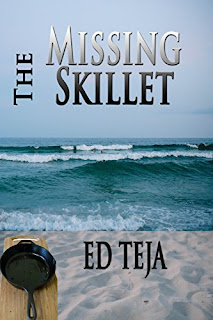
I am quite happy with this story, and would like to do more along this line, combining my interest in mysteries with explorations of Asia. It's only up on Amazon as an ebook now but it interests readers, then I'll be doing more of these.

Hemingway wrote that you need distance from a place you've been before you could write about it honestly, and I'm just beginning to understand what he meant. I am still writing stories of the Caribbean and, in some rather interesting ways, the place and people are clearer to me than it was when I lived there.  That is just starting to happen with Asia.

To help keep my other stories in front of people and hope they find more readers, I've lowered the price on the ebooks for my Venezuelan murder mystere (book one in the Martin Billings stories, as it is turning out) UNDER LOW SKIES to $3.99 and THE LEGEND OF RON ANEJO (the story of the world's best Caribbean boat bum) and FLOAT STREET NOTES to $2.99. The new prices will be reflected at Amazon and Smashwords later today and ripple through to the other outlets over time (I don't control that).

Wednesday, February 12, 2014

Goals and intentions

I have a planning allergy. Even the word gives me chills. Plans are elaborate creatures that tend to go wrong when they go at all. I am far more comfortable with goals and intentions. They seem to incur less wrath of The Powers That Be. Maybe because they are less arrogant.

That's how I see things anyway.

In line with that, my current intentions are focused on mysteries. I have written them before and want to write more. Beyond that, my intention (goal) is to absorb them as I have in the past--read other writers by the ton, both contemporary and those in the pantheon. Not that I haven't been reading mysteries, but I have read them on a causal basis, as one came to hand. But down at the library yesterday (for you younger people, that is a building that is full of books without having quite enough books in it) I was noting the size of the mystery section. I knew mysteries were popular, but it looked out of proportion. Given that librarians treasure the space available I am sure that is just my perception.

As a mystery lover, it makes sense to focus on them for a time. Reading them intensely, while writing more of my own, can't hurt. So yesterday, at that archaic building I still visit, I picked up Dorthy Sayers' Whose Body?, Georges Simenon's Maigret Bides His Time and Mickey Spillane's Black Alley and brought them home to devour.

I don't think I've set myself a difficult or onerous task.

Wednesday, January 22, 2014

Clay McKenzie

Although writing moves on, THE LEGEND OF CLAY MCKENZIE slowly gains traction. We've gotten some wonderful reviews (thank you reviewers) and good reader feedback. So I keep looking for ways to promote it, to let more people know.

Part of the interest in the book is in the character of Stephanie Masters, a young editor who takes a risk to make certain a great book (in her opinion) gets published despite all odds. Her interest isn't entirely altruistic and she is hoping to make her mark in the industry. Taking the gamble, what it does for her and to her, is a core theme. She goes about it knowingly and here is a quote from the book, a thought she has when she irrevocably makes her decision.